










































Advocacy, Communication and Social Mobilization (ACSM) for Tuberculosis Control
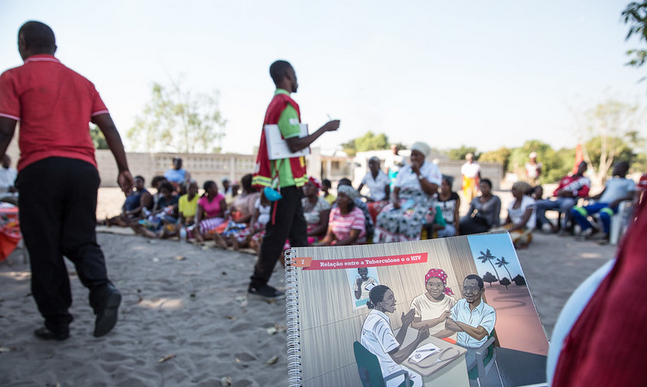
From the section "About this Handbook":
"This Handbook is a guide to support the design and implementation of effective advocacy, communication, and social mobilization activities in tuberculosis (TB) control at country level. As declared by the Stop TB Partnership’s Advocacy, Communication and Social Mobilization Country-Level Sub Group" in its “10-Year Framework for Action, a significant scale up of advocacy, communication, and social mobilization (ACSM) is needed to achieve the global targets for tuberculosis control as detailed in the Global Plan to Stop TB 2006–2015. Increased efforts and attention to TB are particularly essential with the growing emergence of multi-drug resistant (MDR) and extensively drug-resistant (XDR) tuberculosis. ACSM activities can support timely diagnosis and treatment completion, which will minimize the chances that resistant bacteria will evolve.
This handbook is primarily intended for staff that plan, organize and supervise TB control activities at the national level. Because tackling TB requires commitment and work at all levels, this guide can also be used by TB control staff at the provincial, state, and regional levels; by non-governmental organizations (NGOs) and others involved in TB control, including communications officers, epidemiologists, program supervisors, TB medical specialists, nurses, bacteriologists, statisticians, health educators, logistics officers and trainers. Health managers of refugee and displaced population camps, prisons and large private enterprises, such as factories and mines, will also find this handbook useful. Additionally, teachers in medical, nursing, laboratory and public health schools may find valuable information for training their students in effective, multi-disciplinary TB control.
This handbook was prepared for the Stop TB Partnership by the Academy for Educational Development (AED) and the Program for Alternative Health Technologies (PATH)."
Contents include the following:
Section 1 - Preparing to take action
Introduction
Chapter 1: Understanding advocacy, communication and social mobilization
Chapter 2: Developing a TB strategy incorporating ACSM
Chapter 3: Maximizing skills through partnerships
Section 2 - Core development processes
Chapter 4: Conducting a situation/needs assessment
Chapter 5: Designing ACSM interventions
Chapter 6: Developing ACSM messages and concepts
Chapter 7: Developing ACSM materials
Section 3 - Implementation and evaluation
Chapter 8: Implementing ACSM activities
Chapter 9: Monitoring and evaluating ACSM activities
Chapter 10: Documenting results and providing feedback
References
Annex A: Selected strategic assessment and planning tools
Annex B: Assessment of advocacy, communication and social mobilization in national tuberculosis programmes
Annex C: Examples of ACSM goals/indicators
Annex D: Planning a World TB Day event
Annex E: The stages-of-change model
Annex F: Worksheet for a creative/strategic brief
Annex G: Sample recruitment document for a focus-group discussion
Annex H: Sample guide for a focus-group discussion
Annex I: Sample questions for pre-testing materials
Annex J: Sample questions for evaluating an advocacy initiative
Annex K: The Patients' Charter for Tuberculosis Care
44
- Log in to post comments