










































South Asian Youth as Vaccine Agents of Change (SAY-VAC): Evaluation of a Public Health Programme to Mobilise and Empower South Asian Youth to Foster COVID-19 Vaccine-related Evidence-based Dialogue in the Greater Toronto and Hamilton Area, Canada
McMaster University (Kandasamy, Manoharan, Uddandam, WilliamsSonia S Anand); University of Toronto (Ariyarajah); Western University (Limbachia, Vansjalia); DESALU Creative (An, Lopez, Pacht); Toronto, Ontario, Canada (Silver)
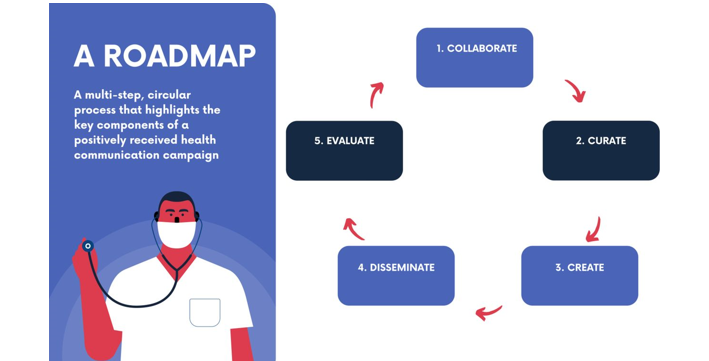
"...collaborative multisectoral partnerships, use of different avenues to curate key COVID-19 vaccine concerns and use of diverse dissemination strategies..."
There have been substantial amounts of misinformation about the importance, safety, and effectiveness of the COVID-19 vaccine. The impacts of this misinformation may be amplified as they circulate among ethnic communities, who may concurrently face other barriers related to vaccine uptake and access. South Asian Youth as Vaccine Agents of Change (SAY-VAC) is a young engagement digital media health programme that sought to combat some of the key sources of COVID-19 vaccine misinformation among South Asian communities of the Greater Toronto and Hamilton Area (GTHA). This paper describes the programme and assesses the change in self-reported knowledge about the COVID-19 vaccine and participating youths' self-reported confidence in conversing about the vaccine with unvaccinated community members.
At the onset of the project, an interdisciplinary team, which was built on multisectoral partnerships across medicine, epidemiology, South Asian health research, knowledge translation science and practice, creative design, and marketing, was established. These individuals were brought together in a collaborative session to generate ideas about values, imagery, objectives, and knowledge to be conveyed in the SAY-VAC videos. Collaborative tools (e.g., Miro Board, an online platform to brainstorm ideas) that enabled active and equitable partnership among all team members were used. Throughout the course of the project, South Asian-based partner organisations were engaged early and often to crystallise current needs/concerns in the South Asian community and mobilise sharing of the final narrative videos.
The team behind SAY-VAC considered it plausible that South Asian youth could serve as agents of change in light of their generation's high comfort level with social media and their role in large multigenerational households. The SAY-VAC programme entailed:
- Creating a series of evidence-based narrative messages in the form of culturally sensitive videos (in English and as a multilingual version) to address key sources of vaccine hesitancy/lack of confidence among South Asians living in Canada (e.g., religious concerns stemming from vaccine ingredients, lack of culturally reflective and effective materials in South Asian languages) - click on the video below to watch one example; and
- Collaborating with 30 digitally savvy youth ambassadors who shared downloadable, compressed versions of the videos in their familial/community networks through WhatsApp, Facebook, and other social media. These videos were intended to be a means through which conversations about the COVID-19 vaccine could be initiated with family/community members and to encourage unvaccinated individuals to consider receiving a vaccine.
The knowledge mobilisation plan included a two-pronged approach: (i) partnering with several grassroots organisations to share the videos via social media platforms; and (ii) hosting "action station" webinars with youth in the GTHA to better equip them to foster COVID-19 vaccine dialogue within their households.
Data were collected at SAY-VAC programme initiation (September 1 2021) and a week later at programme termination. At the time of the postsurvey, 23 (76.7%) had facilitated a conversation with an unvaccinated family/community member over the course of the pandemic and until the time of the postsurvey. Since the SAY-VAC orientation session, about half (14, 46.7%) of participants were able to convince at least one unvaccinated individual to get vaccinated within a week. However, there was not a statistically significant difference between presurveys and postsurveys regarding facilitating a conversation with an unvaccinated family/community member.
Examining the proportion of participants who agreed or strongly agreed to statements rated on a 7-point Likert scale between presurveys and postsurveys, participants' self-rated knowledge about the COVID-19 vaccine increased from 73.3% to 100.0% (p=0.005), and their self-rated confidence to facilitate a conversation about the COVID-19 vaccine with unvaccinated family/community members increased from 63.3% to 93.1% (p=0.006). Most participants agreed or strongly agreed that the SAY-VAC video empowered them to facilitate a conversation about the COVID-19 vaccine with family/community members (25, 83.4%) and that their family/community members found the video helpful in answering their questions (21, 70.0%).
Some of the key learnings from implementing this programme included:
- Establish an avenue to proactively plan for the changing guidelines around COVID-19 by prioritising on-the-ground needs assessment in regular intervals and consistently reviewing the changing landscape.
- Aim to get more linguistic representation, as the South Asian community is very heterogenous (linguistically and culturally). Although SAY-VAC included five primary languages, it would have been even more fruitful to include others, even those that are less frequently spoken in the GTHA.
The SAY-VAC programme highlights the importance of community partnerships in developing and disseminating culturally responsive health communication strategies. The team calls for further assessment of the evidence for and use of non-traditional avenues to engage the public.
BMJ Open 2022;12:e061619. doi:10.1136/bmjopen-2022-061619
- Log in to post comments