










































WOMEN'S NETWORKS and GROUPS - Policy, Strategy, and Investment Argument 1 from the Direct Impact Evidence
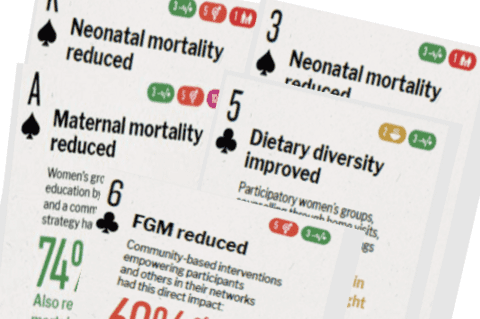
The impact of women's groups on some core, priority issues - e.g., maternal mortality and violence - is clear from the data.
This finding suggests that a vitally important social change, community engagement, and behaviour change strategy for long-term impact on those core priorities is the establishment and support of women's groups where the leadership, facilitation, agenda-setting, and action decisions come from women themselves. That strategy needs investment.
Example Data
| Strategy | Impact |
| Neonatal Mortality down 22% | |
| Neonatal Mortality down 32% | |
| Community Action and Women's Groups | Odds of Minimum Dietary Diversity up 39% |
| 69% Talked to Family vs. 12% in Control |
Policy Implication: That development organisations adopt policies that support the identification, creation, and support of women's groups where the leadership, facilitation, agenda-setting, and action decisions come from the women themselves in those groups.
Strategy Implication: That development organisations implement strategies that focus staff time and institutional resources and capacities on creating the space for women’s groups to emerge in all contexts relevant to their priorities and on providing support for those groups to grow and flourish.
Investment Argument Implication: That the compelling evidence demonstrating the direct impact of women’s groups across some core, high-priority development issues - for example, neonatal mortality down 22% and 32% in 2 published research studies - are advocated to funding organisations as further input to their data-driven investment decision-making.
Links to other strategic and investment Implications
INTRODUCTION: Policy, Strategy, and Investment Implications - SBC Direct Impact Evidence
DIGITAL NETWORKS - Policy, Strategy, and Investment Implication 4 from the Direct Impact Evidence
OVERVIEW AND GAPS - Policy, Strategy, and Investment Implications - SBC Direct Impact Evidence
... and this specific look at the implications for action on a 2 key child protection concerns.
Female Genital Mutilation and Child Marriage: Impact Data with Action Implications