










































From Coverage to Empowerment: Integrating Gender in Immunization Demand
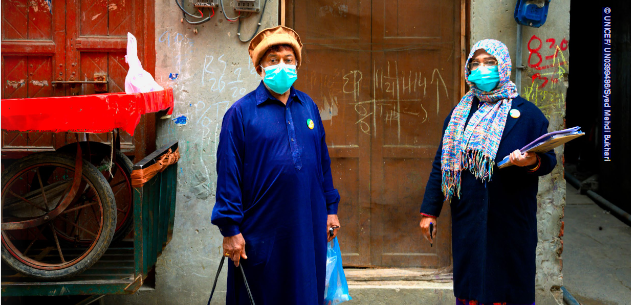
"Understanding gender barriers and developing people-centred tailored strategies and interventions to address those barriers is critical to addressing equity issues and in improving access to immunization and other health services." - Dr Ephrem Tekle Lemango, UNICEF, from the Foreword
The importance of gender-responsive interventions is increasingly recognised as key to successful immunisation programmes. Accordingly, United Nations Children's Fund (UNICEF) country offices (COs) have engaged in immunisation demand programmes with an explicit gender focus. This document features case studies from six countries - Liberia, Mozambique, Pakistan, Rwanda, Sudan, and Yemen - that outline good practices in applying gender-responsive and -transformative approaches to boost demand and support vaccine uptake. On the whole, the cases illustrate how demand generation, also referred to as social and behaviour change (SBC), efforts can reduce gender inequities in immunisation, as well as transform norms and power structures that limit women's mobility, voice, decision-making and control over health decisions.
The case studies draw on a combination of primary and secondary research, including consultations with selected COs conducted from December 2021 to May 2022. Each case has five sections:
- Overview of the context and background
- Analysis of the gender barriers
- Description of the intervention and how gender considerations were included in design and implementation
- Key achievements
- Summary of lessons learned based on innovations, promising, or emerging practices
The case studies capture the strategic thinking behind planning and implementation of gender-responsive immunisation demand efforts. They include, in brief:
- Vaccine outreach campaigns in Liberia: This short-term intensive immunisation outreach activity was implemented in urban Montserrado County, home to the capital city Monrovia. After-hours vaccination drives were conducted in marketplaces, making it easier for working mothers (and fathers) to have their children vaccinated. Reminder phone calls, door-to-door visits, and community events were held were additional strategies for circumventing key barriers faced by women such as distance, transportation costs, time away from household chores, and travelling with young children in tow. Recruitment of female vaccinators promoted vaccine acceptance and uptake among families who were resistant to male vaccinators. Immunisation data show that coverage was higher and dropout rates lower in the years where these efforts were conducted. Integration of immunisation with nutrition and birth registration services was a facilitating factor. The case study highlights the important role of coordinating delivery of essential services with community engagement and demand generation activities.
- Model Families in Mozambique: Designed to improve child health outcomes while fostering a shift in gender norms, Model Families is a community-based approach to promote an integrated package of health and immunisation, hygiene, sanitation, education, and protection practices. Model Families are certified based on adoption of established behavioural indicators verified by Community Health Committees (CHC), which include a majority or at least equal ratio of females to males. The emphasis on male engagement and sharing of household responsibilities aims to shift gender roles and perceptions of what is typically considered a male or female responsibility. UNICEF found that promoting this integrated package led to gains across multiple health outcomes and supported health-seeking behaviours for children and caregivers.
- Digital Campaigns in Pakistan: Insights from social media were used to develop tailored messages and increase vaccine uptake. Specifically, public Facebook posts about vaccines were analysed, and the effectiveness of different content, messages and messengers in changing behaviours was tested through Brand Lift Studies. Evidence generated from the digital campaign, which reached nearly 7.2 million people, was used to inform gender-responsive demand efforts for routine immunisation and for COVID-19, measles, rubella, and typhoid vaccines. According to UNICEF, the insights-based strategy was gender responsive and resulted in increased conversation among women, especially young mothers, about vaccines. Messages addressing concerns related to vaccine safety during pregnancy and lactation were designed and disseminated based on analysis of public narratives on social media. The digital component complemented ongoing community engagement efforts such as awareness-raising sessions, door-to-door visits, and engagement of religious leaders and elders.
- Entertainment-Education in Rwanda: An integrated entertainment-education initiative was used to address gender norms across children's health, immunisation, education, protection, hygiene, and sanitation programmes. The initiative combines radio, television, theatre, community engagement, and digital media on two multimedia platforms: Urunana and Itetero. Gender transformation is central to both programmes: Participants are urged to critically examine gender norms, roles, and relationships, including power inequalities in families and communities. Both programmes embed gender socialisation within a broader focus including health and immunisation, resulting in changes across multiple domains of child development.
- Social Listening in Sudan: This intervention drew on data captured through the Talkwalker application, which UNICEF Sudan has been using since August 2021. Initially, Talkwalker was used as a monitoring tool to capture the response to COVID-19 vaccine demand creation and service delivery efforts. Social listening highlighted that fewer women compared to men were engaged in online conversations regarding vaccines. In response, UNICEF produced tailored messages that responded to women's concerns about vaccine safety during pregnancy, breastfeeding, and menstruation and disseminated them through social media. Engagement activities were also carried out in health centres and communities. UNICEF asserts that social listening informed gender-responsive messaging, provided a space for women's and men's concerns to be voiced, addressed vaccine hesitancy, and resulted in enhanced female engagement on social media (women were able to share questions and fears and receive accurate information). The rapid feedback and adaptation were particularly important for a pandemic response.
- Mother to Mother Clubs (M2M) in Yemen: Established to promote child survival, well-being, and development, these clubs provided a forum for mothers to learn, share, and discuss issues related to child survival, well-being, and development. Each club member shares what she has learned with at least five houses in her neighbourhood. M2M vlubs have promoted messages on COVID-19 through house-to-house visits, women's sessions, school-based activities, and puppet shows. The sessions and home visits countered vaccine refusal and hesitancy and provided reminders to complete/follow the recommended schedule. Having a preexisting group that meets regularly provided a base for risk communication and community engagement during the COVID-19 pandemic. According to UNICEF, the benefits of participation in M2M clubs go beyond immunisation and bolster several areas of health and well-being of children, women, and, ultimately, families.
Click here in order to access the French version of this document (112 pages, PDF).
Click here in order to access the Spanish version of this document (112 pages, PDF).
Emails to The Communication Initiative from Deepa Risal Pokharel on October 18 2022 and from Amelia Rui Cao on March 15 2023 and April 6 2023; and the Vaccination Demand Hub, October 27 2022. Image credit: © © UNICEF/ UN0399486/Syed Mehdi Bukhari
- Log in to post comments