










































Her Excellency Camara Sanaba Kaba - Minister for Social Action and Promotion of Women and Children, Government of Guinea, - DFID Girl Summit 2014
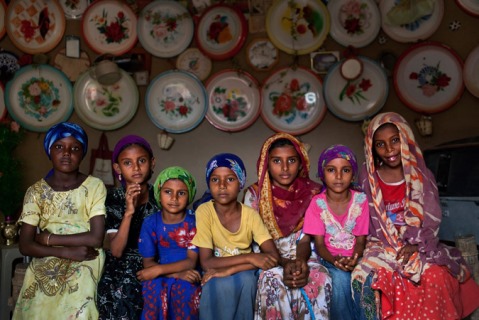
Panel Discussion: Spotlight on Progress "Can Better Legislation and Successful Prosecutions Help End FGM and Child, Early and Forced Marriage?"
Context: This presentation is from one of the 14 "Spotlights on Progress" video-recorded sessions from the Girl Summit 2014, London, United Kingdom (UK). The sessions were organised to share best practice between practitioners, grassroots activists, and government ministers across the issues of female genital mutilation (FGM) (also FGM/C - female genital mutilation/cutting) and child, early, and forced marriage (CEFM). Girl Summit is a project of the Department for International Development (DFID), UK.
From the conference outline document: "Effective legislation and its implementation require the sensitive involvement of many actors, including governments at all levels, traditional and faith leaders, civil society and communities. Join us as we explore the pathways to ending FGM and child, early and marriage through legal reform, promotion of child rights, and the role of prosecutors in order to achieve lasting change for girls and women."
Profile of speaker: A featured panelist of this Spotlight session was Her Excellency Camara Sanaba Kaba, Minister for Social Action and Promotion of Women and Children, Government of Guinea, whose presentation was entitled "Implementing legislation against FGM". The Minister cited a 2012 survey in Guinea which showed the following: “97% of girls and women between 15 and 49 have undergone FGM in Guinea - almost 22% before their fourth birthday, and 60% before they turn 9 - one of the highest rates in Africa. Only 19% of women and girls believe it should be abandoned. Yet, FGM has been illegal in Guinea since 1965, and the law was strengthened in 2000.” Minister Kaba announced the agreement of the Government of Guinea to sign the Girl Summit Charter.
Strategy overview: The Minister recognised the summit as being of particular relevance to Guinea, where FGM rates are amongst the highest in the world. She emphasised how FGM is a national phenomenon in Guinea and one that is not linked to religion, region, or ethnicity. The Government of Guinea has taken concrete action to tackle FGM, which was declared illegal in a law on reproductive health passed in 2000. This was further strengthened by the 2008 Children’s Code, which includes tackling FGM as a key element of child protection.
In 2010, a coordination committee was established on enforcing the 2000 legislation to bring together key professionals in order to harmonise efforts and increase efficiency at the local and national levels. There is an institute for protecting women and children at risk of violence and a focus on interaction among organisations working on these issues. The Government has also established a Strategic Plan for Child Protection for 2012-16. This has included activities such as: training 150 service providers from the police and judiciary to improve enforcement of FGM legislation; the establishment of a free phone line for women and girls at risk of FGM to improve reporting and prosecutions; and workshops to improve coordinated service delivery and reporting. There is an awareness-raising programme in schools. “These efforts have resulted in 10 arrests of FGM practitioners, thus far. New and strong commitments from the Government have led to the strengthening of law enforcement to enforce existing laws recently”, and to collaboration with UK law enforcement. The first two arrests for violations of these laws took place in July of 2014. There are many active programmes to end FGM involving communities, religious leaders, and journalists to raise awareness among families. Recently, a campaign was launched to reduce the amount of girls cut during school vacations: the "season of mass excision". Challenges include gathering the political will from some circles and religious support to stop the practice of FGM.
Overview of this Summit Session: From the Girl Summit summary document: "New and traditional media, brand platforms and communications strategies are proven tools that have triggered discussions and shifted perceptions. Speakers will give examples of how these tools are being used to change how girls see themselves and are perceived in their communities, as well to elevate the dialogue on key issues to national levels and beyond."
The speakers for this session are:
Alison Saunders CB Director of Public Prosecutions for England and Wales.
Kranti L. Chinnappa Executive Director, Human Rights Law Network (HRLN).
Dr. Tabinda Sarosh Programme Director, Shirkat Gah.
Her Excellency Camara Sanaba Kaba Minister for Social Action and Promotion of Women and Children, Government of Guinea.
Her Excellency Hooria Mashhour Minister of Human Rights, Government of Yemen.
The session is chaired by Ikenna Azuike is a former lawyer and the founder of What's Up Africa, an ...internet programme about African news, initiatives and people. He is also the founder of Strawberry Earth, a foundation devoted to promoting awareness about sustainability."
Footage of this (available below) and other "Spotlights" are available on DFID’s YouTube channel.
The Girl Summit is a project of DFID. Click here and scroll down to see the full list of individuals and organisations committed to working on girls' issues, as well as a list of Girl Summit Charter signatories.
DFID Girl Summit Outcomes website, accessed on August 18 2015. Image credit: Stephanie Sinclair
- Log in to post comments