










































Participatory Photography for Peace: Using Images to Open up Dialogue after Violence
University of New South Wales
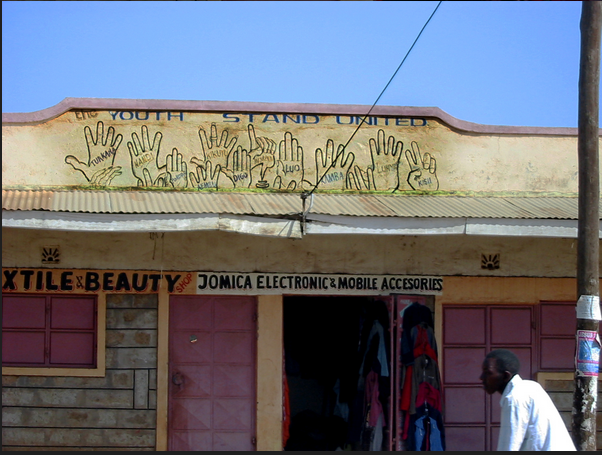
Through the illustration of Lenses of Conflict and Peace, a project carried out in a Kenyan slum with a group of young people from different tribes who experienced the events of the 2007/2008 Post-Election Violence, this paper discusses how participatory photography (PP) can be utilised as a peacebuilding tool in post-conflict environments around the world.
Author Valentina Baú begins with a literature review of PP, a method connected to that of "Photovoice", that highlights how this tool has been mostly implemented in the health education/public health sector for the purposes of research and advocacy. One of the papers she cites involves a Freirian approach to PP that "encourages individuals to set in motion an introspective analysis, which progressively supports them in becoming aware of the power dynamics and diverse social interactions characterising their reality. It also encourages them to take action, from a place of newly acquired critical consciousness, or conscientisation. This process, which starts with the individual, forms the basis for social change." Such approaches are in line with the communication for development (C4D) framework, which understands communication as going beyond information transmission to encompass "a process intent on creating and stimulating an understanding that forms the basis of development". Several researchers whose work is described here have explored the use of PP from a C4D perspective.
Baú goes on to describe Lenses of Conflict and Peace, including its background, objectives, and daily activities related to peacebuilding. In June 2014, she travelled to the slum of Langas on the outskirts of Eldoret in Kenya's Rift Valley to carry out a PP project with 9 young people between the ages of 20 and 34 who were exposed to the ethnic conflict that took place in the country seven years earlier. "[I]ndividuals' fear for their safety, distrust of other groups, and inability to look positively to the future impact on their perception on the importance of rebuilding peace. Rather than interacting with other groups and re-initiating collaboration, people recognise their ethnic community as a shelter. This is part of the social damage caused by the fighting, which can be meaningfully addressed at the grassroots level."
The project was organised in collaboration with A-Step (Africa Sports Talents Empowerment Program), a local organisation that uses sports and other activities to provide young people in the Rift Valley with peacebuilding skills. The organisation recruited participants, who consisted of 2 members of the Kikuyu tribe belonging to 2 different sub-tribes, 1 member of the Kalenjin tribe, and 6 members of different tribal clusters including Teso, Luo, Kisii, Nubi, Luhya and Marana. With the exception of the Kisiis, these groups sided with the Kalenjins during their fight against the Kikuyus in 2007/2008. The project comprised a series of five workshops that focused on a number of participatory activities (described in the paper) that allowed participants to reflect on both concepts of conflict and peace in their community, and to take images that related to their personal experience. A process of storytelling around the images taken concluded each workshop.
According to participant observation and short interviews carried out at the end of the project as part of debrief and evaluation activities, through listening and building trust, "participants began to think critically not only about peace and the degree to which peacebuilding was evolving in their community, but also about the role they played as actors and agents of change." A 22-year old participant observed: "I've learned a lot about other tribes. After the elections it was very hard for us, the Kikuyus and the Luos, to sit at one table. We would meet maybe in church or in the [football] field for a short time, but in this project I've been able to learn a lot about the Luos and their experiences and their feelings after the violence."
Baú explains that there were some challenges, such as those relating to ethics and safety, as the fear and mistrust over conflict-related events were still strong. In the paper, she clarifies how these issues were addressed. Baú also notes that, when working on these types of projects, it is important to recognise not only the limitations but also the risks of misrepresenting participants' messages because "the background, stories, language and emotions of participants end up forming an intricate plot that can often be difficult to untangle for project leaders/ facilitators and recipients of the final visual output. It is therefore essential to pay careful attention to uncovering and clarifying some of the unexpressed meanings that the group is trying to convey as a whole; this can be helpful in avoiding becoming trapped in individual representations that perpetuate specific stereotypes. It is also especially relevant in a mixed ethnic context."
In conclusion, Baú states that the considerations advanced in the paper suggest further developments in the use of PP. "If the application of this method in a post-conflict environment, as shown in this study, can open a path towards dialogue and understanding between (formerly) opposing groups, it follows that effective ways of incorporating PP in the design of larger peacebuilding programmes need to be theorised and practically explored."
More information on this article, including how to access it, can be found here.
Journal of Peacebuilding and Development, Vol.10, No.3, pp.74-88 - sent via email from Valentina Baú to The Communication Initiative on January 3 2016; and email from Valentina Baú to The Communication Initiative on January 6 2016. Image credit: Lenses of Conflict and Peace, Head On Photo Festival
Comments
Turning round the Post election violence experience
The 2007/08 was a dark period in Kenya. Most organizations stool in the frontline , exposing their lives to secure and provide essential services to kenyans. To reconcile communities, great effort has been enhanced to speak openly and advocate for co-existance among different tribes.
The biigest and traumatizing experience being how to accept rape memories and children born from the act. It is great that the experience has been managed, however there is still alot to do in educating the youth to engage in constructive activities to avoid being misuesd by the Kenyan selfish politicians.
- Log in to post comments