










































EBOLA - Social Shakes
The Communication Initiative
Below is part of an overall paper called "SOCIAL SHAKES - rethinking the core principles for principled and effective development action" - the full Table of Contents is here.
EBOLA
When people in West Africa saw the bodies of their loved ones spirited away from their homes by "foreigners" they did not know, completely anonymous in their full (and scary) hazardous material (hazmat) suits that looked like something from outer space, who whisked in and out of their homes rapidly and disposed quickly of the bodies of those loved ones, they read the communication signals inherent in those actions and they responded. What the hazmat people were doing may have been the required technical prescription to reduce transmission. But it backfired really badly.
Epidemiology and medical expertise came up against something much stronger - hundreds of years of cultural and family practice around death and dying. Wanting to give their loved ones the proper way (from their own frame of cultural and family reference) to die and be cared for after death, and definitely not wanting the snatch-and-grab raids in their homes, people hid their dying and dead. Then they cared for them - washed them, kissed them and dressed them, for example. It was an almost perfect recipe for accelerated transmission of Ebola. And that is what happened.
The fault here does not lie with the people in Guinea, Liberia and other countries. The fault lies with the communication signals and messages transmitted by the actions of the international Development community.
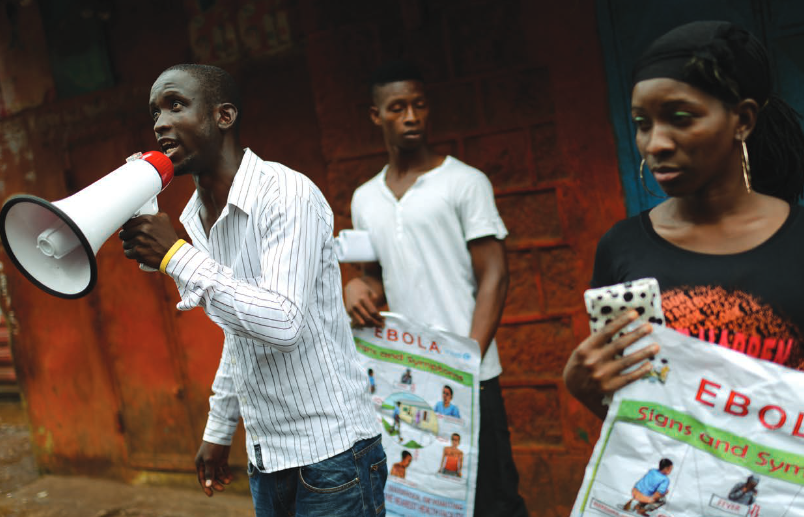
It was only when some real communicators became involved that the tide began to turn. Now there were initiatives that gave locals in Liberia, Guinea and elsewhere a voice; that facilitated public and private spaces for conversation about Ebola; that shared important knowledge in ways that resonated with local cultural touchstones; that in thought and deed were highly respectful of local, cultural and family tradition and practices, even as they sought to facilitate adapting those ways of life to ones that advance safer health; and that were openly led with a much better balance between local people and international "experts".
The tide turned in the Ebola struggle.
The next section in this paper is POLIO.
The previous section in this paper is TOBACCO.
Editor's note: Above is an excerpt from Warren Feek's paper "SOCIAL SHAKES - rethinking the core principles for principled and effective development action".
The full table of contents for this paper can be accessed at the bottom of the opening page.
Image credit: Samuel Aranda/Panos
- Log in to post comments