










































EMPOWER: Empowering People Affected by Mental Disorders to Promote Wider Engagement with Research
This project involves collaborating with non-governmental organisations (NGOs) in 4 countries - India, Kenya, Nepal, and Zambia - to develop public engagement materials that communicate mental health research findings to local audiences. EMPOWER aims to strengthen the capacity of these organisations to use science research findings to develop a plan for engagement with the communities with which they work. That plan will seek to improve the understanding of the nature and treatment of mental disorders and reduce the stigma associated with them.
EMPOWER began at the Leadership in Mental Health Course in Goa, India, when representatives of all the partner organisations participated and interacted with other mental health stakeholders to develop the key messages and communication strategies. Then, EMPOWER supported each organisation to develop, implement, and evaluate the resulting strategy with their members and local communication experts. They then disseminated these communication strategies at the Global Mental Health Summit in Cape Town, South Africa, in October 2011.
Examples of the activities carried out in each of the 4 countries include:
- Goal: to establish a productive network of user groups and researchers based in sub-Saharan Africa and South Asia sharing a common interest to work in a partnership to promote the goals of the Movement for Global Mental Health. EMPOWER group members connected via telephone every 4-6 weeks and in person on two occasions (and in smaller opportunistic sub-group meetings more frequently). Through this regular interaction, the group members supported each other in achieving the objectives - in particular, the communication products designed to foster public engagement, including visual media (e.g., posters, photographs, and documentary), print media (e.g., newspaper articles), electronic media (e.g., videos and websites) and performance (for example, street theatre). These meetings were also designed to generate new ideas for future partnerships (e.g., proposals to continue the partnership in additional areas of public engagement).
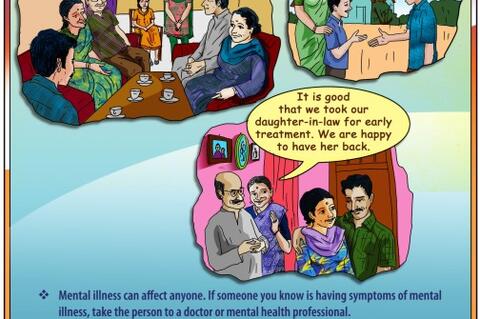
- Goal: to communicate key issues with regards to promoting the rights of people affected by mental disorders and improving access to mental health care in the user group countries. In Zambia, this was achieved by sensitising the general public through street theatre and health workers at a primary health care centre through posters. In India, organisers sought to raise awareness among diverse general audiences, including policymakers, through posters and an audiovisual product. In Nepal, the project produced a mental health documentary that was meant to sensitise the community and policy makers; the first screening was held in Kathmandu in the presence of law makers, the health secretary, human rights workers, the media, mental health stakeholders, and nationally influential people. In Kenya, awareness was created through the two musical audiovisual products. These products, by displaying the life stories of affected persons, are designed to serve as an evocative tool for addressing stigma. For example, the Users and Survivors of Psychiatry in Kenya (USPKenya) chose to use videos featuring life stories of persons who have been affected by mental disorders, with the aim of destigmatising mental health and putting up a face to the statistics. This video, which can be seen below, features a song about serious mental disorders.
- Goal: to strengthen the capacity of the user organisations to represent mental health issues in the country. In Kenya, EMPOWER put USPKenya in the limelight as the national user/survivor organisation in Kenya. According to organisers, membership of USPKenya is growing consistently as a result, with 2 or 3 new members making enquiries per month and, occasionally, a media house calling to ask to feature USPKenya in the press. Similarly, the Nepal Mental Health Foundation is recognised as a key civil society organisation in mental health, and its founder is a regular contributor to newspapers in that country on mental health issues. In Zambia, the Mental Health Users Network of Zambia (MHUNZA) group has been actively involved in the development of the first national mental health policy in the country. Group members were invited to national and international fora to share their experiences, e.g., to the NIMH Global Mental Health conference in April 2012 and the Wellcome Trust International Engagement conferences in July 2012. In Zambia, an unanticipated consequence of the project was that 3 clinics in Matero, Chawama, and Kanyama are piloting a project in offering mental health services at a weekly clinic as a response to the engagement with MHUNZA in the process of designing and disseminating the posters. EMPOWER also supported the revision of the websites of the Movement for Global Mental Health website and partner organisations to make them more user-friendly and interactive, with technical support from expert web-designers.
Health.
According to organisers, despite the evidence of the burden of mental disorders and the cost-effectiveness of treatments, the "treatment gap" remains very large, up to 90% in developing countries. One of the major barriers to making mental health care more accessible is the marginalisation of the voices of people affected by mental disorders and the limited capacity of groups representing them (user organisations) to articulate positions grounded on science. This was the primary rationale for EMPOWER.
EMPOWER is a collaboration between the London School of Hygiene & Tropical Medicine with five non-governmental organisations (NGOs): Sangath (India), the Nepal Mental Health Foundation, the Mental Health Users Network of Zambia (MHUNZA), the Users and Survivors of Psychiatry in Kenya (USPKenya), and the Richmond Psychosocial Foundation (India) and two consultants (Charlene Sunkel and Ritz Kakuma) EMPOWER is supported by a grant from the Wellcome Trust.
Emails from Vikram Patel to The Communication Initiative on September 4 2012 and October 11 2012; and Centre for Global Mental Health website, September 14 2012.
- Log in to post comments