










































Empowering Men Who Have Sex with Men to Live Healthy Lives in Colombia
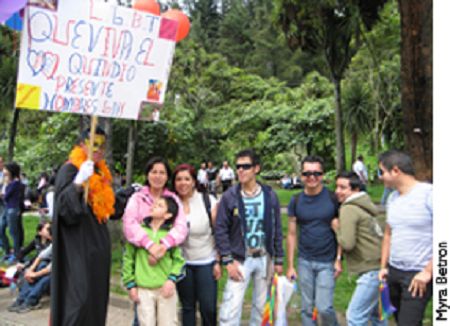
This case study explores one effort to reach out to and include members of the lesbian, gay, bisexual, and transgender (LGBT) community in Colombia, who are often marginalised due to "pervasive stigma and discrimination". Bogotá's Colombia's Lesbian, Gay, Bisexual, and Transgender Community Center (LGBT CC) was founded in order to help fill the perceived need for a support network plus increase access to legal and psychological support for most-at-risk populations (MARPs). This case study examines the centre's efforts to provide a social and educational base for its clients (mostly men who have sex with men, or MSM) while also advocating for their rights. This case study is part of the Gender Strategies in Concentrated Epidemics series published by the United States Agency for International Development (USAID)'s AIDSTAR-One (AIDS Support and Technical Assistance Resources, Sector 1, Task Order 1).
As detailed here, the LGBT CC was established in 2006 with the overall goal of increasing citizen participation and advancing the rights of the LGBT population of Bogotá. PROFAMILIA designed the health and psychological service components and ensured quality of services, while Colombia Diversa designed legal components. The centre continues to operate as a government entity managed by the District Institute for Community Participation and Action (IDPAC). LGBT individuals can meet at the community centre to organise political actions, conduct advocacy, provide emotional support to one another, participate in cultural and educational activities, and receive legal or psychological services for personal problems resulting from stigma and discrimination based on their sexual orientation and gender identity. Services are offered in the following areas: sexual and reproductive health and HIV, legal rights and protection, psychological counselling, and social work. The LGBT CC also gives the community an alternative meeting place instead of the local bars and has been established as safe space where MSM feel no pressure to engage in risky behaviour and where they can develop supportive social networks, which can also reduce their risk of contracting HIV.
According to this case study, what has worked well includes:
- Filling a service gap for LGBT individuals in Bogotá: "Both staff and users of the community center emphasized the value that the psychological services alone provide to community center users; MSM said that the center has helped them to accept their sexual orientation and gender identity, and to understand and defend their rights as MSM. The community center added more space in response."
- HIV prevention through social and political action: "The value of the space and support that the community center offers for reflection, organizing, and empowerment cannot be overestimated in terms of its contribution to HIV prevention and mitigation."
Recommendations (described in detail in the resource) include: draw on the strengths of various sectors to develop integrated services; assess community needs in advance of designing programmes; secure internal expertise and leadership to maintain the focus on HIV; combat HIV-related stigma, as well as stigma based on gender identity; involve appropriate and representative groups to represent LGBT populations; and undertake rigorous monitoring and evaluation.
Email from Anna Lisi to The Communication Initiative on October 11 2011; and AIDSTAR-One website, October 20 2011.
- Log in to post comments