










































Narrowing the Gender Gap - Empowering Women through Literacy Programmes
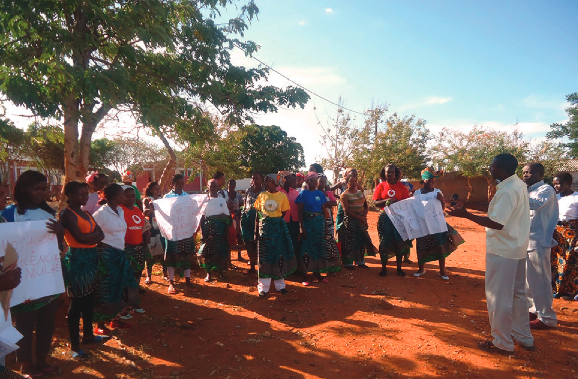
“Real progress in realizing the right to education is impossible without specific strategies that focus on women and prioritize the challenge of low literacy levels and poor basic education.”
This document showcases successful literacy programmes from across the globe that target non-literate young and adult women, equipping them with relevant, high-quality learning opportunities and empowering them with the basic skills of literacy and numeracy. The case studies are meant to provide lessons learned as well inspiration for literacy stakeholders around the world, including policymakers, programme providers, and practitioners, who are working to reduce gender disparities in and through adult literacy and basic education
The publication starts with a discussion of some of the barriers that women face in accessing literacy programmes related to accessibility, quality, and relevance. For example, in multilingual and multi-ethnic contexts, women would not be able to benefit from literacy programmes if they were not conducted in mother-tongue language. Other barriers to learning for women include socio-economic barriers, social norms, traditional beliefs, and cultural expectations that hinder women from participating in education programmes. Participation can also be hindered by distance (rural dwelling), as well as insecurity, with violence being an important barrier to girls’ and women’s participation in education.
The examples included in this compilation show how literacy programmes in different regions of the world have developed solutions that address the challenges and potential barriers women face in accessing empowering literacy and learning opportunities. “They show that literacy development is not simply about creating opportunities to learn a set of skills required to read and write. Women’s literacy is bound up with issues of equity, violence, health, girls’ education, community involvement and governance. The examples show that literacy is a complex process which must be integrated with other development activities, including those focused on women’s health, employment, active citizenship and family and community relationships. However, they also testify to how literacy learning can support the empowerment of women, their families and communities, and how this, in turn, can promote successful strategies to address identified challenges.” They also highlight important lessons learned and keys to success, such as the involvement of men and community leaders, and the importance of direct participation of women in the design, planning, and evaluation of literacy learning.
The case studies showcase the variety of approaches to mainstreaming gender into literacy programmes and promoting women’s empowerment, as well as the creative approaches used by some initiatives. Most of the women’s literacy programmes featured take a functional approach, linking literacy learning with income-generating activities in ways that are directly responsive to local needs and potentials. For instance, the Integrated Women’s Empowerment Programme in Ethiopia, combines literacy education with non-formal vocational skills training and entrepreneurial or business training and support, which helps adult women in rural areas to improve their livelihoods. Other programmes engage women in learning by focusing on their role as mothers of young children. One example of this is the Turkish Family Literacy Programme, and, in particular, its component programme, Mother-Child Education, an intergenerational, culturally-sensitive and home-based early childhood education (ECE) and adult education/literacy programme targeting socially disadvantaged children and their mothers, many of whom struggle with literacy.
Some case studies use an integrated and intergenerational approach such as the Mother and Child Education Programme in Nigeria, which covers a range of needs, including adult literacy and ECE, health, civic education, environmental management and conservation, income generation and the promotion of employment in rural areas. In the case of the Tostan Community Empowerment Programme in Senegal, the empowerment of women and adolescent girls is at the heart of programme activities. The programme works with the whole community so that the women can actively participate in and lead community activities. Particular attention is paid to mobilising people to promote positive social change, often resulting in the elimination of social norms and practices that harm women.
Literacy in Local Language, a Springboard for Gender Equality, implemented by Associação Progresso in rural communities in Mozambique, is an integrated literacy-gender programme that provides literacy classes in local languages with a focus on awareness-raising and advocacy on domestic violence and human rights. The programme works simultaneously with two main target groups: women and men already enrolled in literacy classes in twenty-five rural communities; and local leaders, including village chiefs, leaders of male and female initiation rites, matrons and religious leaders. Many programmes aim to enhance learners’ understanding of personal, family and community health and hygiene. The Gender Justice for Marginalized Women Programme in Indonesia is an integrated programme which offers opportunities for basic literacy and life skills training, including health education. Most importantly, it also offers training in reproductive health, childcare, psychological support and other care services to marginalised women in urban slums and rural communities.
A particularly creative approach to engaging women in literacy learning is used by the Literacy Through Poetry Programme in Yemen. It offers women with little or no education the opportunity to develop literacy skills, building on their cultural traditions and heritage, particularly through the use of local poetry, proverbs and stories. Another creative programme is Khabar Lahariya (New Waves) in Nirantar, India, which links literacy with the production of a contextually relevant and gender-sensitive low-cost weekly rural newspaper. Participating women learn skills in news gathering and production, creating a pool of community-based female journalists who produce and disseminate essential news about their communities.
Each case study in this compilation contains information about on: the background and context of the programme, the aims and objectives, the approaches and methodologies of programme implementation, institutional roles and responsibilities, programme/curriculum design and implementation, recruitment and training of programme facilitators, monitoring and evaluation, challenges and lessons learned, impact, and sustainability.
The case studies are as follows:
Africa
- Ethiopia - Integrated Women’s Empowerment Programme (IWEP)
- Liberia - Economic Empowerment of Adolescent Girls Project
- Mozambique - Women’s Literacy in Angola and Mozambique
- Mozambique - Literacy in Local Language, a Springboard for Gender Equality
- Nigeria - Mother and Child Education Programme (MCEP)
- Senegal - The Tostan Community Empowerment Programme
Arab States
- Algeria - Literacy, Training and Employment for Women
- Morocco - Means of Socio-economic Empowerment and Integration for Women
- Palestine - The Early Childhood, Family and Community Education Programme
- Yemen - Literacy Through Poetry (LTP)
Asia and the Pacific
- India - Khabar Lahariya (News Waves)
- India - Sahajani Shiksha Kendra: Literacy and Education for Women’s Empowerment
- India - Saakshar Bharat Mission
- Indonesia - Gender Justice Education for Marginalised Women
- Pakistan - Adult Female Functional Literacy Programme
- Pakistan - Mobile-Based Post Literacy Programme
- Philippines - Supporting Maternal and Child Health Improvement and Building Literate Environment (SMILE)
- Republic of Korea - Mothers’ School
Latin America and the Caribbean
- Bolivia - Bilingual Literacy and Reproductive Health
- Mexico - Bilingual Literacy for Life
Europe and North America
- Turkey - Family Literacy Programmes
- Turkey - Functional Adult Literacy and Women’s Support Programme (FALP)
- United Kingdom of Great Britain and Northern Ireland - Prison Family Learning Programme
UIL website on July 6 2017.
- Log in to post comments