










































Use of Social Mobilization and Community Mobilizers by Non-governmental Health Organizations in Malawi to Support the Eradication of Polio, Improve Routine Immunization Coverage, and Control Measles and Neonatal Tetanus
University of Malawi (Chimpololo); Johns Hopkins Bloomberg School of Public Health (Burrowes)
"Our research indicates that the enhancement of SM and the use of CMs could help address the recent decline in immunization coverage in Malawi."
The United Nations Children's Fund (UNICEF), the CORE Group Polio Project (CGPP), and their non-governmental health organisation (NGHO) partners have used social mobilisation (SM) and community mobilisers (CMs) as the cornerstone of their strategy for polio eradication throughout the world. According to the 2015-16 Malawi Demographic and Health Survey, the drop in the immunisation coverage level from 81% to 71% suggests the need for improvements in the overall immunisation programme, including the use of SM and CMs. This article, which is part of a series of articles detailing the work of the United States Agency for International Development (USAID)-funded CGPP (accessible through Related Summaries, below), explores the extent to which NGHOs in Malawi use SM and CMs for sharing health information related to polio, measles, and neonatal tetanus prevention by increasing participation in immunisation campaigns, improving routine immunisation coverage, and detecting new cases of vaccine-preventable diseases.
SM is defined here as "a holistic approach that involves all relevant segments of society: policymakers and other decision-makers, opinion leaders, the media, bureaucrats and technical experts, professional associations, religious groups, private sectors, NGHOs, community members, and individuals. It takes into account the collective needs of the people, embraces the critical principle of community involvement, and seeks to empower individuals and groups for action." Obregon and Waisbord identify 3 kinds of SM used in polio eradication efforts:
- Pragmatic SM, which involves using community members to help achieve predetermined goals, such as immunising all children against polio or identifying cases of acute flaccid paralysis (AFP), measles, or neonatal tetanus;
- Activist SM, which is characterised by community ownership and wrests the decision-making power from global or national direction to local communities; and
- Hybrid SM, which combines aspects of pragmatic SM (organising and coordinating activities) and activist SM (harnessing leadership and insights within the community). (The use of CMs would be key in programmes that apply hybrid SM, as they provide a link between NGHOs and the community.)
Data collection involved document analysis and interviews with 11 NGHOs, who, it was found, use a variety of approaches for SM, including these examples:
- UNICEF/Malawi focuses on interpersonal communication provided by health surveillance assistants (HSAs), mass media communications, and "edutainment" on Child Health Days.
- Catholic Development Commission in Malawi (CADECOM) uses drama, songs, poetry and dance, and other community participatory approaches to convey health information. (Notably, theatre performances help NGHOs like UNICEF and CADECOM "attract large crowds where messages can be communicated in understandable and memorable ways using the local language, and they stimulate discussions that motivate people to bring their children for vaccination. Furthermore, people may discuss barriers to immunization and identify ways to address them.")
- The Catholic Health Commission conducts SM activities through HSAs who train CMs on antenatal care.
- Save the Children organises open days (open-air events organised in a community to share information), at which time SM is implemented for immunisation and family planning activities.
- World Vision International (WVI) in Malawi relies mostly on household-level counseling through Care Group Volunteers (CGVs) to relay health messages; in 2015, the organisation trained 15,940 CGVs, and CGVs reached more than 150,000 households. World Vision/Malawi also uses community-level meetings, open days, and media campaigns.
- The Catholic Relief Services (CRS) consortium uses the Care Group model for SM, which is designed to communicate health information to every household through a cascade process of information sharing.
- USAID/Malawi draws on a national team of master trainers, who facilitate capacity-building programmes for district CM trainers and the district health promotion subcommittee of the District Executive Committee. These people subsequently train CM teams, who go on to use media campaigns transmitted through radio programmes and printed booklets to pass on health information encouraging immunisation and antenatal visits. The CM teams also link community groups to radio programmes through radio listener clubs, and they conduct public outreach activities to encourage access to health services, including immunisations. Data show that, through USAID's Maternal and Child Survival Program, the use of SM has increased the utilisation of immunisation and family planning services in more than 90% of health facilities in the priority districts of Dowa and Ntchisi.
- Adventist Development Relief Agency/Malawi uses facilitators to train community members and implement advocacy activities as part of its SM approach.
- Amref Health Africa conducts its SM through public meetings and training workshops to raise awareness about maternal and newborn mortality.
Although the programmes of some of the organisations included in this study do not directly focus on the eradication of polio and control of measles and neonatal tetanus, their activities do embrace community-based surveillance, which targets infectious diseases such as polio and measles. The integration of community-based surveillance for infectious diseases, other medical conditions, and vital events registration (of births and deaths) has supported polio eradication efforts elsewhere. Questionnaire results reveal, for example, that:
- 54% of the 11 NGHOs make extensive use of CMs to share health information, 27% make moderate use of them, and 19% do not use them at all.
- 52% of the NGHOs use the pragmatic SM approach, 31% use the activist SM approach, and 17% use the hybrid SM approach.
- 64% use house-to-house visits, 82% engage influencers (opinion leaders), and 55% engage women as CMs.
- 64% of the NGHOs involve community groups in their campaigns, and 9% work with schools and students.
According to the Expanded Programme on Immunization (EPI), HSAs were able to provide essential health services and conduct mass screening of 1.9 million children in 2016 using SM techniques. NGHOs supported the provision of all recommended immunisations to 460,000 infants in 2016. The coverage for the diphtheria-pertussis-tetanus (DPT) vaccine showed improvement, with 84% of children vaccinated with DPT against a baseline of 81% and a target of 93%. In addition, more than 180 facility staffs, 100 Area Development Committee members, and 500 community members have received orientations on immunisation and family planning integration.
Challenges affecting SM and the use of CMs include:
- Household members may have negative attitudes toward campaigns or interpersonal conflicts with CMs.
- Men are less likely to take part in training sessions for CMs and to participate in the open days.
- Exposure of communities to varying campaign approaches and methodologies from different organisations can lead to confusion.
- Not only is retention of radio messages low, but radio listening clubs are also difficult to scale up because of logistical and financial challenges.
- In some cases, CMs expect financial benefits and lose motivation if this expectation is not met.
Challenges associated with certain types of SM interventions:
- Health education talks in group settings often provide limited opportunities for audience feedback, making it difficult to determine whether participants retain the information being conveyed.
- The development of appropriate messages for theatre communication can be difficult because of the nuances of the local vernacular from one place to another.
- Mass media campaigns are expensive and cannot reach remote and/or mobile populations that lack access to radios or televisions.
- Interpersonal communication through health workers can result in fatigue from high workloads.
- Brochures and handouts are expensive to produce and ineffective for illiterate community members.
- "Edutainment" requires substantial resources to organise.
The article concludes with a discussion of approaches to strengthen SM and the role of CMs by NGHOs. For instance, more could be done to use women as mobilisers, engage teachers and students, and include mobile and remote communities in immunisation campaigns. The organisations carrying out SM and using CMs might also consider establishing a subcommittee on vaccine-preventable diseases to strengthen SM and CM activities by avoiding duplication of efforts, strengthening funding mechanisms, and fortifying monitoring and evaluation mechanisms.
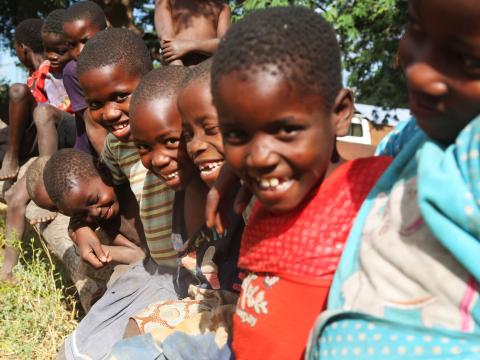
American Journal of Tropical Medicine and Hygiene, 101(Suppl 4), 2019, pp. 85-90. https://doi.org/10.4269/ajtmh.19-0021. Image credit: World Vision/Malawi
- Log in to post comments