










































Bringing Justice to Health: The Impact of Legal Empowerment Projects on Public Health
"LEGAL EMPOWERMENT: The transfer of power from the usual gatekeepers of the law - lawyers, judges, police, and state officials - to ordinary people who make the law meaningful on a local level and enhance the agency of disadvantaged populations."
Bringing Justice to Health profiles 11 legal empowerment projects based in Indonesia, Kenya, Macedonia, Russia, South Africa, and Uganda. These projects were selected out of over 50 such projects funded since 2006 by the Open Society Foundations because they show the range of approaches to legal empowerment that they support in their broader effort to promote health-related human rights interventions. The report tells the personal stories of people around the world - such as sex workers, people who use drugs, palliative care patients, people affected by HIV, and Roma - for whom human rights violations are part of everyday life. Sexual violence, discrimination in housing, unwarranted dismissal from employment, unfair evictions, denial of child support, and police harassment are only a few such violations. The report shows how the non-governmental organisations (NGOs) that founded projects to address these issues set about resolving problems in a way that is designed to empower those who are often least able to exercise their rights.
As the report outlines, these projects use a range of approaches to make the law meaningful for marginalised people and to improve their health - from providing legal information using web-based consultations, human rights workshops, or pamphlets to forging positive working relationships between law enforcement officials and criminalised groups, to establishing communication networks by means of referrals, door-to-door consultations, or public debates. Notably, most of the legal empowerment projects profiled in Bringing Justice to Health train paralegals drawn directly from the marginalised groups they serve. In brief, the 11 projects include:
- Women's Legal Centre (WLC), South Africa - WLC collaborates closely with the Sex Workers Education and Advocacy Taskforce (SWEAT) and Sisonke, South Africa's national sex worker movement. WLC began by offering weekly workshops to sex workers on human rights and elements of law relevant to sex work. It soon expanded its reach by employing 4 sex workers as community-based paralegals, who regularly accompany the SWEAT team on their outreach visits. WLC has produced pamphlets and information cards in an effort to shift the attitudes of police toward sex work and empower sex workers.
- Survivors Self Help Group, Kenya - "Recognizing the importance of working closely with local businesses and the police force, Survivors initiated a series of workshops in which paralegals educated the community about the concerns of sex workers and the relevance of human rights law to sex work. One of these workshops alone drew 60 police officers, 20 security guards, 30 bar managers, 20 bar owners, and 70 sex workers. After some initial backlash, Survivors noted an improvement in relations between sex workers and law enforcement authorities, and police officers began offering their mobile phone numbers so that sex workers could contact them directly when problems arose with their clients."
- Institute for Human Rights (IHR), Russia - In 2007, the IHR developed the interactive legal information website Hand-Help.ru, which facilitates legal self-representation and promotes legal literacy among those charged with drug-related offenses.
- LBH Masyarakat, Indonesia - Lawyers at LBH Masyarakat have trained a number of former users as paralegals who can perform outreach work in their own communities. "[T]hey have succeeded over time in developing positive working relationships with police and prison wardens alike....LBH Masyarakat's advocacy has also proven powerful at the judicial level."
- The Omari Project, Kenya - This project has trained 3 paralegals, all of them former users who understand the needs of people who use drugs, know where they can be found, and perform outreach work in coastal Kenya's muskanis, or smoking dens. "These paralegals are an important bridge between the drug-using community and the health care, legal aid, and harm reduction services that the Omari Project provides at its drop-in center."
- Kenya Hospices and Palliative Care Association (KEHPCA) - As part of its Legal Aspects Program, KEHPCA works with over 40 hospices and palliative care centers in Kenya, training health care providers as paralegals who can identify legal issues among their patients, dispense basic legal advice and information, and provide referrals to pro bono lawyers. KEHPCA has also developed a series of pamphlets addressing the rights of palliative care patients, including guidance on assigning power of attorney, a template for writing a will, and information about palliative care patients' rights and pain management.
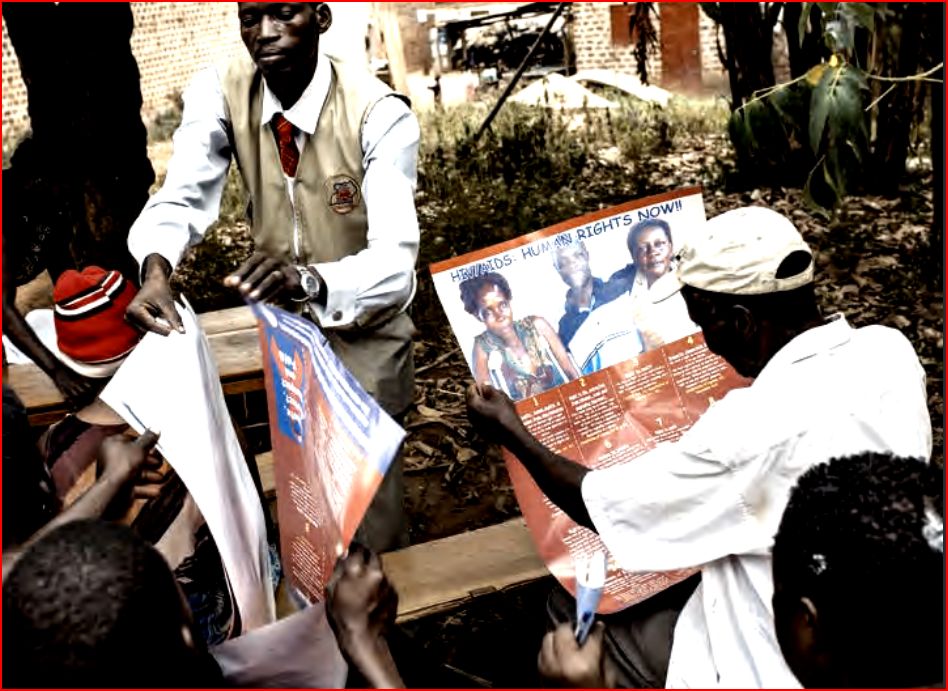
- Uganda Network on Law, Ethics and HIV/AIDS (UGANET) - UGANET's paralegals inform people living with HIV about their rights, mediate disputes, carry out follow-up consultations with the police, and empower people to engage in community activism and perform simple legal acts like preparing a will. UGANET also engages in several initiatives facilitating access to justice in Ugandan communities. These include regular community sensitisation workshops on human rights violations, as well as legal education radio programmes, where UGANET staff members illustrate legal concepts using case studies and invite listeners to call in with questions.
- KELIN, Kenya - Kelin conducted community conversations with widows, elders, and government officials to solicit their input and encourage their involvement as a basis for holding training sessions with elders and widows on the human rights provisions relevant to Kenyan property law.
- Legal Aid Centre of Eldoret (LACE), Kenya - Working with the Academic Model Providing Access to Healthcare (AMPATH), LACE has created a one-stop centre for medical treatment and legal advice; together, they have also collaborated on the design and delivery of human rights workshops for health care providers, people living with HIV, and the broader community.
- Christian Health Association of Kenya (CHAK) - "CHAK's legal officer emphasizes the need to work closely with community leaders, who play critical roles in responding to HIV-related human rights violations. She credits CHAK's initial needs assessment and its early identification of partner organizations with helping CHAK address the fullest possible breadth of the community's legal needs."
- Association for Emancipation, Solidarity and Equality of Women (ESE), Macedonia - ESE emphasises the importance of its paralegals' roundtables, which have inspired a growing number of Roma clients to request legal assistance and support with problems concerning health insurance and medical negligence, in addition to issues surrounding discrimination, consent, and confidentiality. In addition, by providing its paralegals with continuous training, ESE seeks to keep them up to date with legal developments in Macedonia and to provide comprehensive and timely advice to their clients.
The legal empowerment projects profiled in this publication aim not only to eliminate barriers between health care providers and legal professionals but also to achieve key health milestones such as those outlined in the Millennium Development Goals (MDGs). "Notably, initiatives promoting the respect of women's property and inheritance rights have decreased their vulnerability to HIV, and efforts to address police harassment among criminalized populations have afforded these communities better access to harm reduction services. These results, in turn, enhance community awareness about marginalized groups whose struggles have long gone unaddressed."
Email from Brett Davidson to The Communication Initiative on October 23 2013.
- Log in to post comments