










































Adolescent Girls Empowerment Program (AGEP)
The AGEP is comprised of three major components:
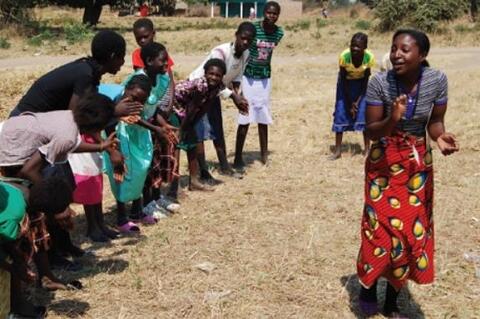
- safe spaces groups in which girls meet once a week over the course of two years for training on sexual and reproductive health, life skills and financial education. Groups are facilitated by a mentor, a young female from the same community.
- a health voucher that girls can use at contracted private and public facilities for general wellness and sexual and reproductive health services; and
- a saving account that has been designed to be girl-friendly.
In order to evaluate the effectiveness of the three programme approaches, participating community areas are randomly assigned to one of four study arms. In group 1 Group, girls attend mentor-led, girl-only meetings; in group 2 girls attend mentor-led, girl-only meetings and receive health vouchers; in group 3 girls will attend mentor-led, girl-only meetings, receive health vouchers, and gain access to savings accounts; and in a fourth group girls will receive no programme services. This study approach is intended to assess how effective each of the approaches are.
The core of AGEP strategy is a safe spaces component which is implemented in partnership with Young Women's Christian Association (YWCA) in Zambia. These are weekly girls’ group meetings in which 20 to 30 girls get together with a young woman mentor from their community. They participate in short training sessions, as well as discuss their experiences of the past week. The meetings are guided by two curricula developed for the programme, one on health and life skills (HLS) and the other on financial literacy. These regular group sessions are intended "to serve two critical functions: 1) they build a platform in which girls can be reached with interventions and educational topics, and 2) they build social assets, including friendships, trusting relationships, and self-esteem, which have a positive influence on their livelihood and health.”
For the meetings, girls are divided into three groups: 10–14 year-olds, 15–19 year-olds, or married girls/mothers. Each group has their own mentor, and a regular meeting day, time, and location. If a girl misses more than two or three consecutive meetings, the mentor conducts a home visit to identify the reason for the girl’s absence. In addition to the weekly group meetings, parents'/guardians'/husbands' meetings are held two to three times per year.
The mentors are chosen during the project's community sensitisation process, when the project is introduced and discussed with community leaders and members of the community. Mentors must be between the ages of 20 and 40, female, able to speak English and the local language, and have completed secondary school.
Some of the girls (those in the study arm 2 and 3) also receive a health voucher redeemable for health services at partner public and private health providers. The services covered include basic wellness exams and age-appropriate sexual and reproductive health services. Each voucher is valid for one year and can be redeemed for six primary and six follow-up consultations. While services at public facilities are currently free in Zambia, "the voucher provides an incentive to the health providers to improve the supply of adolescent-friendly health services, while giving vouchers to girls increases demand."
Population Council has also worked with the National Savings and Credit Bank (NatSave) and Making Cents International to develop the "Girls Dream" Savings Account for AGEP girls in the savings arm of the programme. The account "has a low minimum balance of KR 2.5 ($0.50) to open, and any amount can be deposited or withdrawn with no fee. While girls are able to make deposits on their own, in order to conform to the Zambian legal minimum age of 18 for opening accounts, girls will select a co-signatory — a woman aged 18 or older—to assist with account opening and withdrawals." As part of opening the account, mentors received training and girls and co-signers participated in an orientation session. The group visit the bank branch together to open the account.
Girls, Reproductive Health, HIV/AIDS, Economic developement
According to the Population Council, "program and research findings will be presented to policymakers and program managers from the public, private, and NGO sectors. The program is working with government partners in Zambia, for-profit entities (i.e., banks and private clinics), and NGO partners, as well as in consultation with a wide range of stakeholders, so that best practices from the program can be shared as widely as possible. The goal is to make comprehensive, asset-building programs available to all vulnerable girls in Zambia and more widely in the region."
Population Council, United Kingdom Department for International Development, YWCA Zambia, National Savings and Credit Bank of Zambia (NatSave), Zambia Ministry of Health, Zambia Ministry of Community Development, Mother Child Health
- Log in to post comments