










































Adolescent Girls Empowerment Program: Lessons Learned from the Pilot Test Program
Population Council
This 16-page programme report shares insights from the assessment of a pilot project in Zambia to use a "Safe Spaces” approach to build girls' "social assets" to reduce their vulnerability to gender-based violence, unsafe sex, unwanted pregnancy, HIV infection, and early marriage. According to the report, "married and unmarried sexually active adolescents need information, social support for informed decision making, and access to services and technologies to effectively maintain their sexual and reproductive health." This report outlines lessons learned from the Adolescent Girls Empowerment Program (AGEP).
The AGEP is comprised of three major components - the creation of "Safe Spaces" meetings where group of girls meet once a week with a young woman mentor for training and discussion; the provision of health vouchers that girls can use at contracted private and public facilities for general wellness and sexual and reproductive health services; and a saving account that has been designed to be girl-friendly. In order to evaluate the effectiveness of the three programme approaches, participating community areas are randomly assigned to one of four study arms. In group 1 Group, girls attend mentor-led, girl-only meetings; in group 2 girls attend mentor-led, girl-only meetings and receive health vouchers; in group 3 girls will attend mentor-led, girl-only meetings, receive health vouchers, and gain access to savings accounts; and in a fourth group girls will receive no programme services. The study approach is intended to assess how effective each of the approaches are on the following key indicators: HIV prevalence, HSV-2 prevalence, age at first sex, age at first birth, contraceptive use, experience of gender-based violence, and educational attainment.
AGEP began with a pilot test of all three programme components and the research in mid-2012 in one urban site, the Matero compound in Lusaka District, and one rural site, Chibombo District in Central Province. The pilot was intended "not only to benefit a select number of girls, but also to serve as a critical time in which to identify the strengths and weaknesses of the intervention and make the necessary changes prior to the rollout."
The report outlines the following as lessons learned from the pilot:
Mentor Recruitment and Monitoring
One challenge in the pilot was that some mentors, especially in the rural areas, lived quite far from their participating community areas or sites. This resulted in mentors having to travel longer to get to the meetings, and they were less accessible to the girls outside of the meeting times. Another challenge was retention, some mentors dropped out while others were asked to leave due to poor performance. The following are proposed changes for the rollout of the programme:
- Select mentors after sites have been selected so that the right number of mentors come from each site in which the program is being implemented.
- Include 35 mentors in each training to provide a larger pool of mentors to choose from.
- Select 4-6 alternate mentors per site and continue to include these mentors in trainings so that if they need to be brought in they are up to date on necessary trainings.
Mentor Performance
A major challenge was mentors attendance at meetings, either not arriving on time or not arriving at all. This affected girls attendance as they in turn were no longer confident the meetings would take place as scheduled. For the rollout, it is recommended that strict attendance requirements be outlined for attendance in mentor contracts, with penalties for violation including deductions from their monthly stipend.
eRegistration and Attendance System
With over 35,000 meetings to be held over the rollout period, "it was clear that the paper register system for attendance used during the pilot would not be sufficient. Staff in the field need to know immediately whether or not meetings were held, how many girls attended, what sessions were covered, etc. to ensure high program quality." For the rollout, mentors will receive mobile phones with an app allowing them to enter their weekly attendance. This data will be linked to a web system and will track each girl and her participation. This will later be merged with study data to assess effectiveness of the programme components.
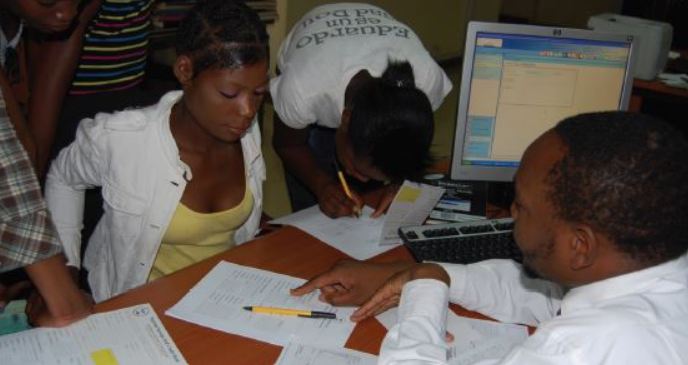
Recruitment (Introductory Meetings/Registration Tables)
It was found in the pilot phase that there were too many meetings as part of the introduction and recruitment, while at the same time the hours and locations of meetings were not convenient for everyone. Another challenge was that "girls would bring friends to join, and they were turned away
because only invited girls were allowed to participate. This sometimes discouraged the invited girls from joining and participating." The following are proposed changes for the rollout of the programme:
- "Have only one introductory meeting for girls and their guardian and assign girls to groups at that first meeting.
- Add registration tables for the week after the introductory meeting so that girls/guardians could come on a one-on-one basis to register if they missed the introductory meeting."
- In large CSAs in rural areas hold more than one introductory meeting to minimize distance travelled.
- Separate girls ages 10–14 and 15–19 during introductory meetings.
- Allow girls to bring friends for the first eight weeks, and after eight weeks, register those initial girls. Groups will not know what curriculum they are until after the eight-week registration period is closed so as to avoid "jumping" to different groups.
- If a girl is selected from a household that has additional girls, invite all the other 10–19-year-old girls in that household as well."
Retention
Regular attendance at the meetings was also a challenge - each week, on average, about 42% of registered girls attended, falling short of the 75 percent target. This was attributed to mentor inconsistencies, as well as diminishing interest among the girls. In response, an attendance passport was developed where a girl gets a stamp for each meeting attended. She will receive small prizes for every ten meetings that she attends. It was also decided that once every other month, the group meeting will be a 'fun-day'—a time for girls to play sports, dance, perform drama, and just talk, without including a formal training session.
Health Voucher
During the pilot, significant time was spent negotiating the partnerships with health providers, as well as develop training for the providers, mentors, and girls. In response to identified provider needs, trainings were conducted over four days and on site, to not disrupt health facility operations, as well as allow more providers to be involved. In addition, non-providers were also included - gatekeepers such as receptionists, clerks, and/or community health workers - who are often involved in registration of clients and/or the initial screening upon arrival at the health center. Girls also need training on how to use the voucher, and given that many are low-literacy or illiterate, the vouchers made use of pictures to illustrate the process.
Savings Account
The financial institution partner, NatSave, was chosen because of the programme fit. After selecting the institution, market research was conducted. Key findings were that "1) adolescent girls in the targeted communities have sufficient existing (or potential) income sources and flexible enough expenditure patterns to be able to save money (on a regular, seasonal, or irregular basis); 2) adolescent girls in the targeted communities are already motivated to save money (or can become motivated via financial literacy and safe spaces mentoring programmes); and 3) adolescent girls in the targeted communities would choose to use a NatSave adolescent girls savings account product (if designed appropriately across all product features) in order to save money (towards short and/or long term goals)." However, during the pilot, a number of challenges arose related to lack of required documentation, distance to the branch, and lack of support from co-signers, and within the safe spaces groups, to encourage saving. Finally, "branch staff did not consistently create a youth-friend environment for Girls Dream Account holders, creating a barrier for girls who wished to return to make additional transactions on their accounts." To address this, in the roll out phase, it is recommended that more opportunities to bank be created, and that NatSave bank staff receive training to emphasise the importance of creating a youth-friendly environment. As well, "more work will be done on the program side to sensitise parents/guardians/husbands, and to link the financial education to savings activities at the group level."
According to the report, the pilot period of AGEP has been critical to the success of the overall programme, both in terms of finalising programme design and testing what works. Following the pilot, the programme is being rolled out to 10 additional sites in Zambia, five urban and five rural, reaching a total of 10,000 vulnerable girls ages 10–19.
- Log in to post comments